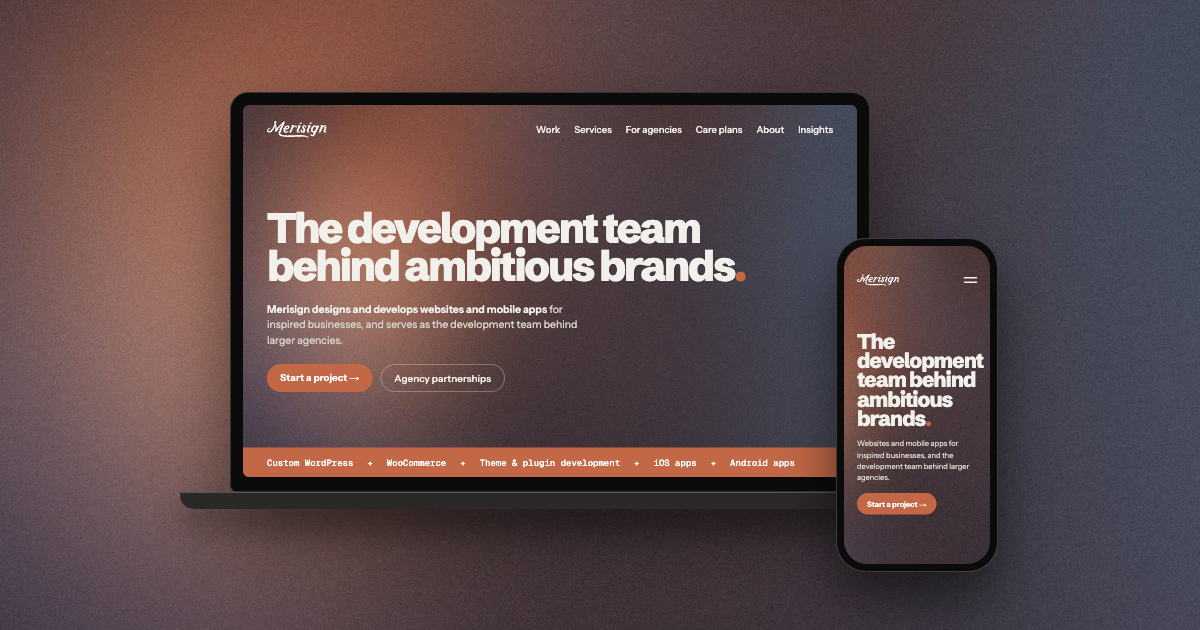
“Should we build an app?” It’s one of the most common questions small business owners ask us. It’s a fair question. Everyone has a phone in their hand, and an app feels like the modern thing to have.
Our honest answer is that many small businesses don’t need an app, at least not yet. A fast, well-built website often does everything an app would, for a fraction of the cost. But for some businesses, an app is exactly the right move. Here’s how to tell which camp you’re in.
When a website is enough
Most customers interact with a small business a handful of times. They find you on Google, check your hours or services, maybe read a few reviews, then call, book or stop by. Nobody wants to download an app for that.
A website is probably all you need if most of your visitors:
- Find you through search, social media or word of mouth
- Want information: what you offer, where you are, what it costs
- Contact you, request a quote or fill out a form
- Buy something occasionally, which a good online store handles well
A modern website already works beautifully on phones. It’s found through search, it’s easy to share with a link, and there’s nothing to install. For most businesses, money spent making the website faster and clearer goes further than money spent on an app.
When an app makes sense
An app earns its place on someone’s phone when people use it again and again. These are the situations where we see apps pay off:
- Repeat customers who act often. Weekly orders, regular bookings, loyalty rewards or reordering the same thing. An app makes those actions one tap away.
- Timely notifications matter. Push notifications reach people in a way email rarely does now: an order is ready, a slot opened up, a reminder for tomorrow.
- Your own staff need a tool. Some of the most useful apps we build are never seen by the public. They help a team manage bookings, schedules or jobs from the field.
- You need the phone’s features. The camera, location, offline access or a smooth logged-in experience can all be better in an app.
If you read that list and thought “that’s us,” an app may be worth a serious look.
The middle ground most people don’t know about
It isn’t always a choice between a website and a big, expensive app. Many businesses can start with a website that handles bookings or ordering well, then add an app later when the demand is clear.
When it’s time for an app, it doesn’t have to be a separate system. We often build apps that run on the same WordPress backend as the website. You update your menu, schedule or products in one place, and the website and the app both stay in sync. That keeps costs down and avoids double data entry.
Questions to ask before you build an app
- How often will a typical customer use it? Weekly is a good sign. Once a year is not.
- What will people do in the app that they can’t do on your website?
- How will customers find out about it and be convinced to download it?
- Who will keep it updated? Apps need ongoing care as Apple and Google update their systems.
- Is your website in good shape first? An app won’t fix a site that’s slow or hard to use.
If you don’t have clear answers yet, that’s useful to know. It usually means improving the website is the better first step.
Our take
We build both websites and mobile apps, so we don’t have a reason to push one over the other. We’d rather you spend your budget on whatever will actually bring in customers and save you time.
If you’re wondering whether your business is ready for an app, let’s talk it through. We’ll give you a straight answer, even if that answer is “not yet.”